
Blog
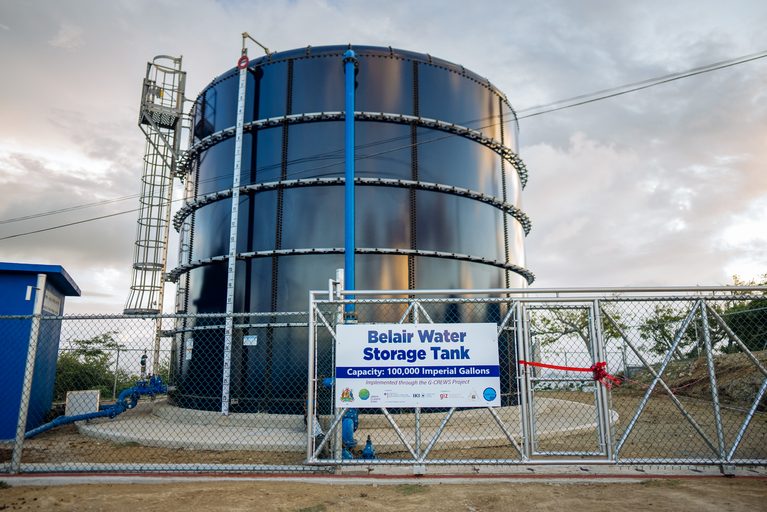
G-CREWS Celebrates Closing Milestones in Carriacou and Petite Martinique
Gennil Reuben-McGuire | October 27, 2026 - Data & Tools
The Climate Resilient Water Sector Project in Grenada (G-CREWS) celebrates first part of the closing ceremonies in the two smaller islands of the tri-island state Grenada. The ceremonies highlight investments in water security, health facilities and climate-resilient farming across the sister islands.
For island communities, water security is not an abstract goal. It is the difference between a health center continuing to care for patients, a farmer protecting a crop, and a household having water during a drought.
That is why the G-CREWS ceremonies in Carriacou and Petite Martinique marked more than the completion of construction works. They highlighted a broader effort to help communities manage water more reliably—and to strengthen the services and livelihoods that depend on it.
Building in resilience, augmenting water supply
In Carriacou, the commissioning programme brought together new water infrastructure at Belair and Mt. Royal, a communal rainwater harvesting system, improvements to health facilities, and support for local farmers.
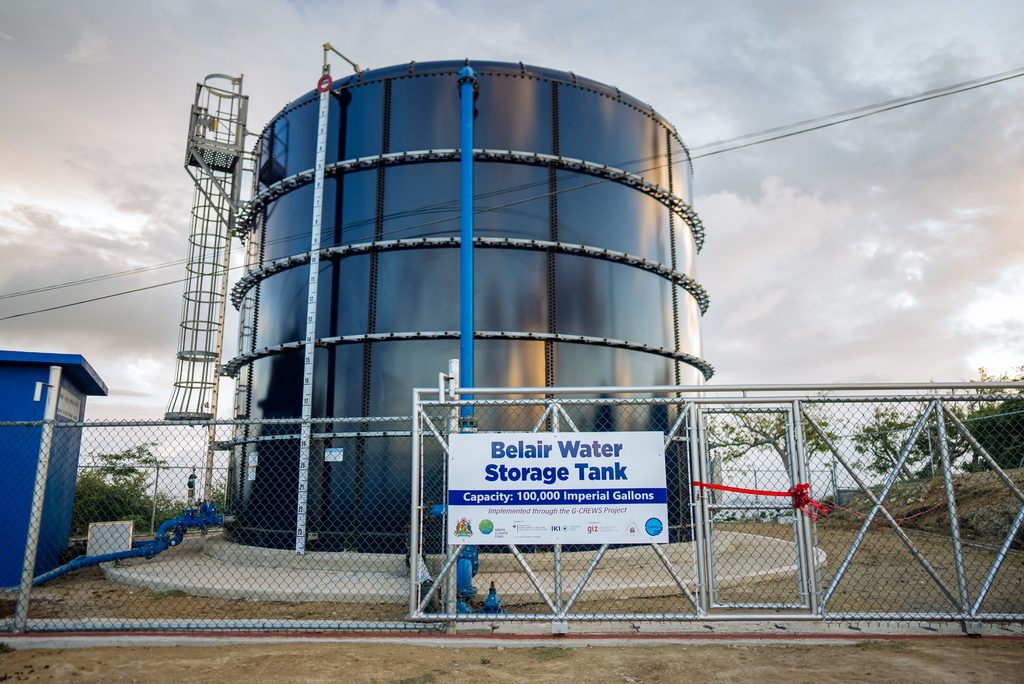
Two storage tanks—each with a capacity of 455 m3—are connected by 680 meters of new pipeline. Together, they are expected to provide additional water storage for up to six days for approximately 4,800 people, helping maintain supply during disruptions such as plant shutdowns or dam cleaning after storms.
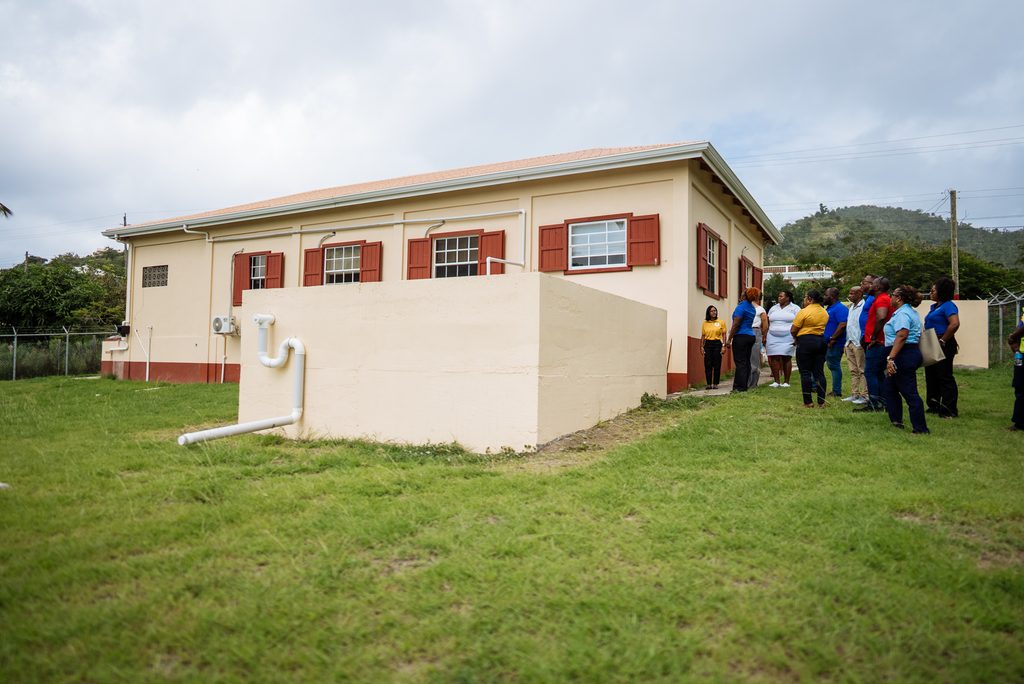
The project also strengthened water storage at three health facilities: Windward Medical Station, L’Esterre Medical Station and Princess Royal Hospital. New cisterns and protected tanks add 936 m3 of storage for the health sector — approximately five days of supply —supporting essential care and sanitation when water services are interrupted.
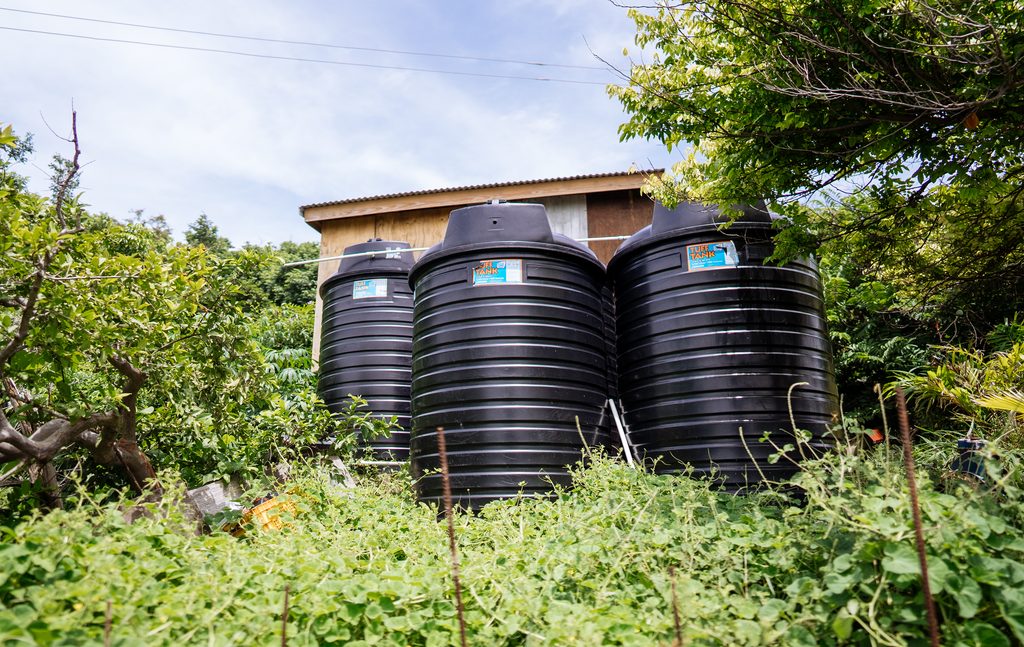
At Mt. Royal, a communal rainwater harvesting system offers another way to capture and store water locally. It is designed to serve an area of approximately 56 households, or 169 people.
Equipping farmers to adapt to a changing climate
Water resilience also begins in the field. Under the G-CREWS Challenge Fund for Agriculture, farmers in Carriacou and Petite Martinique received support for water-efficient irrigation and rainwater harvesting, as well as shade houses. The systems are intended to support farmers to use water more carefully and protect production from increasingly unpredictable weather.
The programme also included training in installation and use, recognizing that lasting resilience depends not only on equipment, but on the knowledge to maintain and make the most of it.
Skills, policies and planning for the long term
The project complemented its water infrastructure investments by strengthening the skills, practices and planning needed to sustain climate resilience. In partnership with the Government of Grenada, the project engaged stakeholders in the National Adaptation Plan update process, delivered behaviour-change campaigns, supported climate-resilient curriculum updates for plumbers and helped improve the water utility’s operational readiness for future disruptions.
The project also advanced rainwater harvesting as a practical way to diversify water supplies and reduce pressure on the centralized water supply system. Building on the long-standing practice of rainwater harvesting in Carriacou and Petite Martinique, G-CREWS supported plumbing training and the development of draft rainwater-harvesting legislation. These measures help carry local knowledge into a wider national approach to decentralized water conservation to prepare the tri-island state to face future disasters.
G-CREWS is jointly financed by the Green Climate Fund (GCF), the German Federal Ministry for the Environment, Climate Action, Nature Conservation and Nuclear Safety (BMUKN) und its International Climate Initiative (IKI), and the Government of Grenada. The project is implemented in partnership with the Government of Grenada, the Grenada Development Bank, the National Water and Sewerage Authority and the German Development Cooperation (GIZ).