
Blog
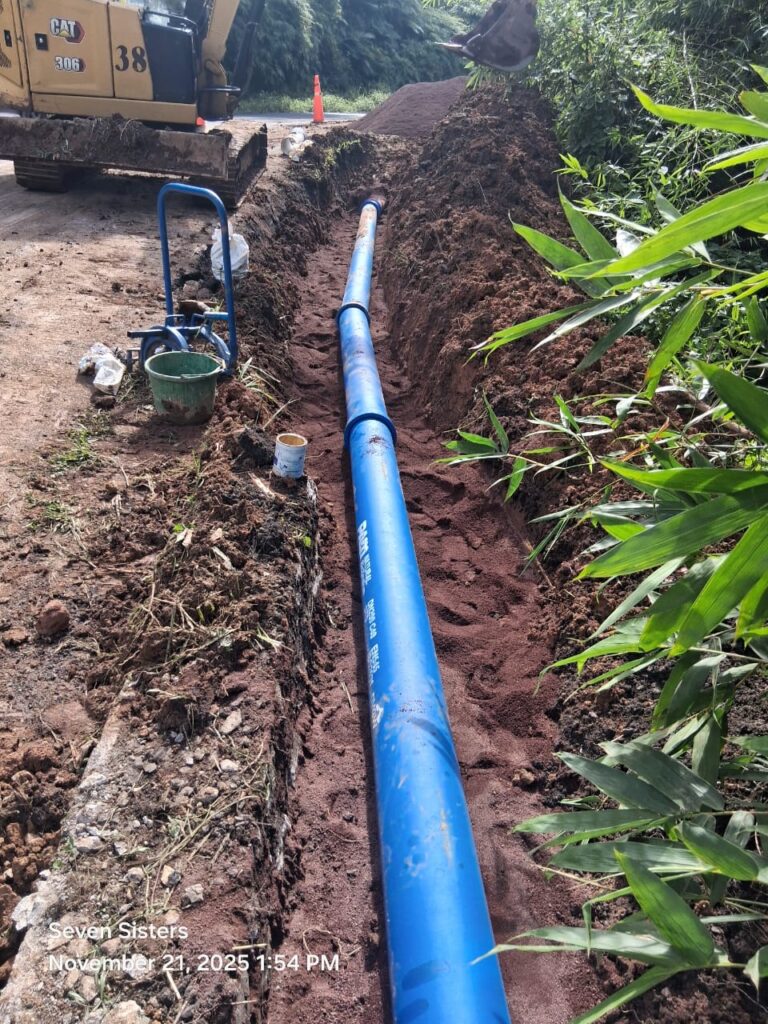
Update on the Seven Sisters Water Transfer Project and its respective Environmental and Social Management Plan Implementation
Gennil Reuben-McGuire | December 1, 2025 - Data & Tools
The Climate-Resilient Water Sector in Grenada (G-CREWS) Project, spearheaded by the National Water and Sewerage Authority (NAWASA) and the German Development Corporation (GIZ), proposed the Seven Sisters Water Transfer Line to solve a critical water deficit facing communities in southeastern Grenada. This intervention aims to augment the water supply, which currently experiences shortages during the dry season, particularly for the Les Avocats and Petit Etang (LA & PE) systems, serving approximately 11,400 people in southeastern Grenada.
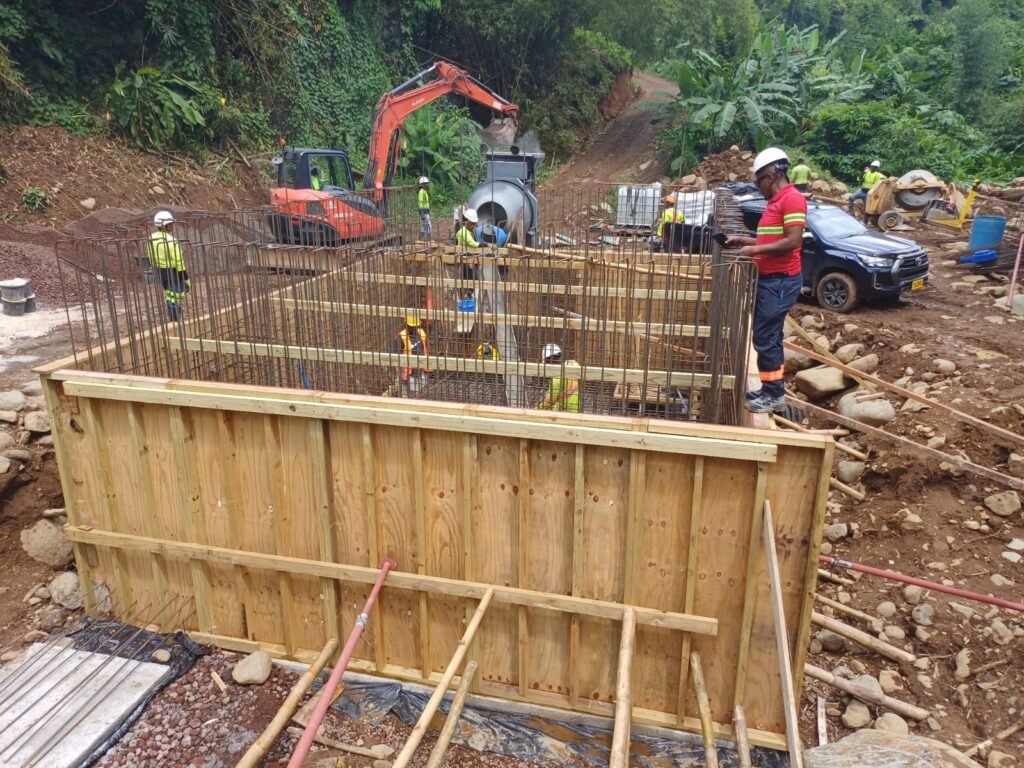
The project involves the construction of an intake and pump station at the Great River and the installation of a pipeline through areas of the Grand Etang Forest Reserve.
On November 13th, 2025, the project team engaged with the Grenada Land Actors to discuss their observations and provide clarification on the safeguarding of the environmental biodiversity and social aspects, outlined below:
Planning Approval
- The project was presented to the Planning and Development Authority (PDA) Board in November 2024. The ESIA/ESMP and planning documents were also formally submitted. The PDA thus granted permission on December 20, 2024.
- The setting up of the Water Resource Management Unit (WRMU) is consistent with Component 1 of the G-CREWS project, aimed at achieving Climate-Resilient Water Governance. The WRMU will be responsible for setting and monitoring the national eco flow and issuing abstraction licenses once operational. Even though the WRMU is not yet staffed and operational, the G-CREWS project has started work on establishing a data management system, procured equipment and contracted consultants for studies supporting the work of the future WRMU.
Landslide Risk and Soil Stability
- A guideline for construction on steep slopes was developed.
- Excavation depths for laying pipes have been reduced to 0.9 meters for trenches along the main road and 0.5 meters for cross-country sections.
- The width of the construction access path in the forest has been reduced from 6 meters to 3 meters.
- The use of high-density polyethylene (HDPE) pipes and electrofusion welding increases longitudinal restraint and resistance, enhancing long-term sustainability.
Biodiversity Conservation
- An ecologist has been contracted, who developed a Terrestrial Biodiversity Management Plan (TBMP) to protect and conserve forest vegetation, habitats, and wildlife, including the endangered Grenada Frog (Pristimantis euphronides). The plan is available here: 2025-GCREWS-Terrestrial Biodiversity Mgtplan-7Sister.pdf
- A formal partnership with the Department of Forestry has been established to finalize the on-the-ground route and develop a tree removal/management plan.
- Preservation of Mature Trees: Efforts are being made to preserve mature trees (12 inches diameter at breast height (DBH) or greater) where possible.
- Replanting native vegetation, including endemics, in disturbed areas along the pipe-laying route is strongly recommended for habitat restoration and a replanting plan is developed together with Forestry.
Water Abstraction and Eco Flow
- The project has implemented measures to minimize the impact of water abstraction on the Great River’s streamflow. A limnologist conducted further studies and developed a methodology on a national environmental flow approach. This work will serve as a basis for the soon-to-be operational Water Resource Management Unit (WRMU) to set up the national Eco Flow. ESMP Action 8: River Hydrology, Biodiversity, and Water Use Assessment (ECO FLOW) – Climate Resilience Portal
- The project promotes and trains farmers in setting up and maintaining Rainwater Harvesting (RWH) systems and encourages them to benefit from the G-CREWS Challenge Fund for Agriculture for improved irrigation and RWH systems as an alternative of using water from the river for irrigation.
A Grievance Redressal Mechanism (GRM) is in place through G-CREWS to manage complaints regarding the overall project, construction nuisances, and worker grievances. Procedure and Guidelines for Grievance Mechanism – Climate Resilience Portal
The Government of Grenada, in partnership with the German Development Corporation (GIZ), is implementing the Climate-Resilient Water Sector in Grenada (G-CREWS) project. The project is jointly financed by the Green Climate Fund (GCF) and the German Federal Ministry for the Environment, Climate Action, Nature Conservation and Nuclear Safety (BMUKN) under its International Climate Initiative (IKI), and the Government of Grenada with the overall objective of increasing systemic climate change resilience in Grenada’s water sector.